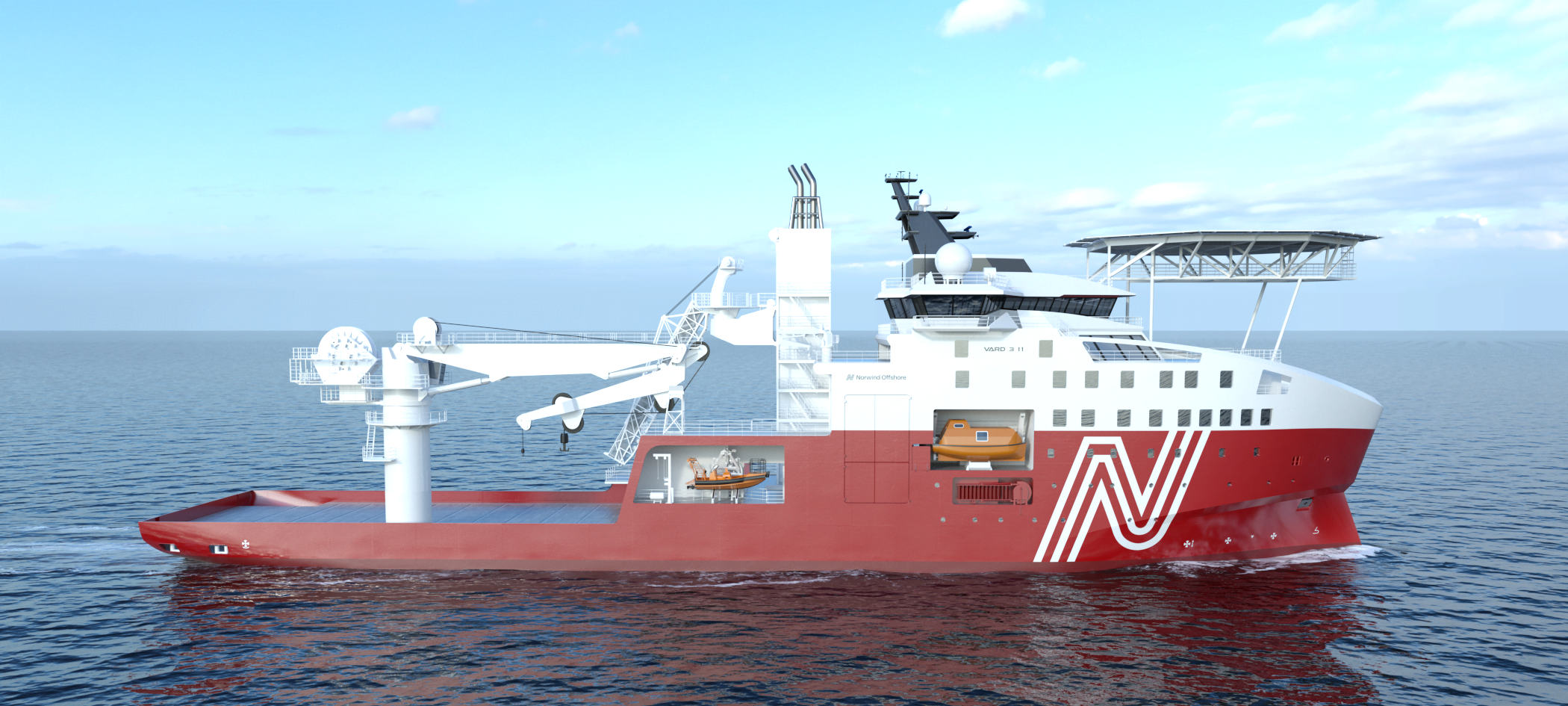
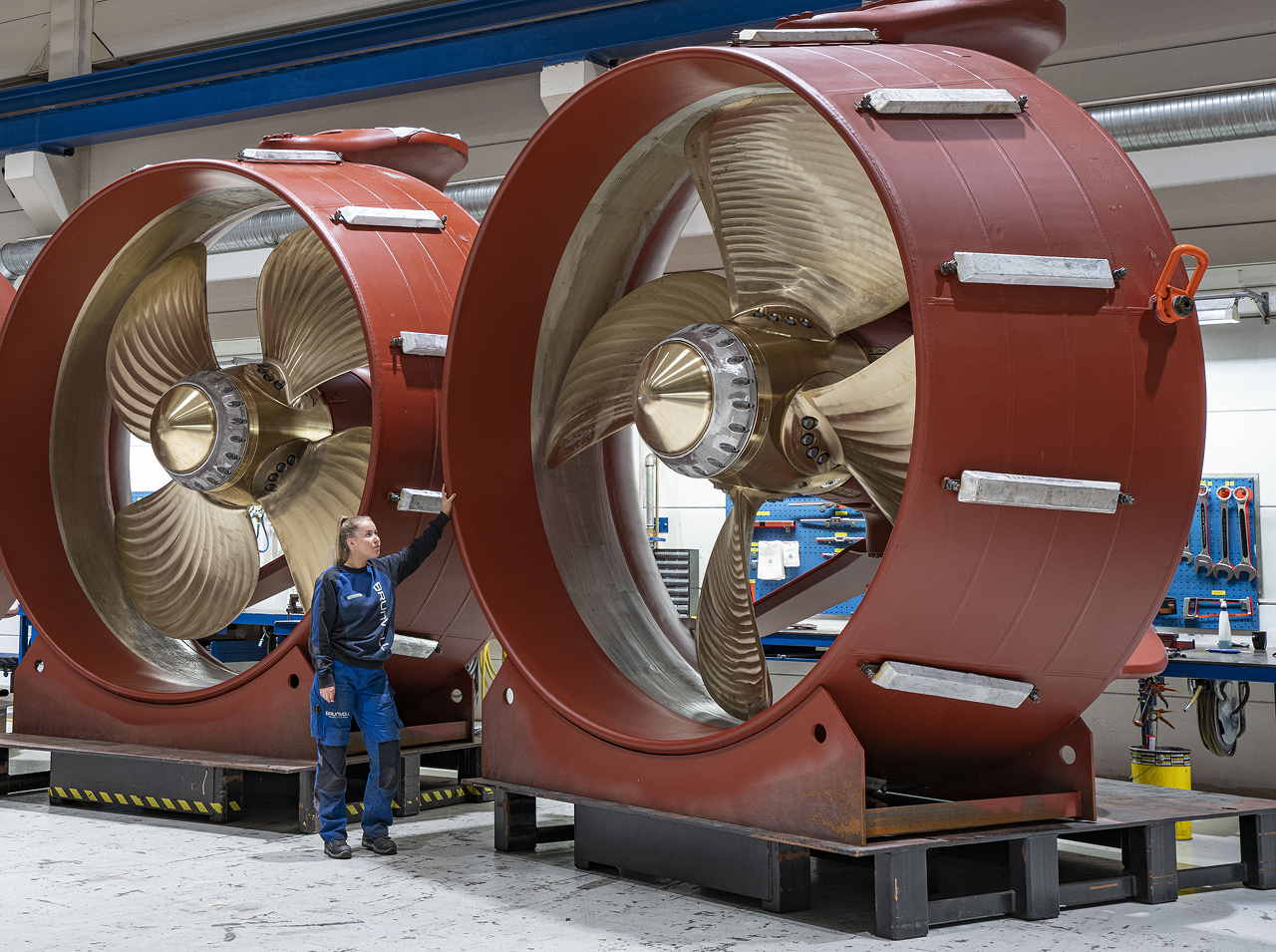
Many vessels — particularly workboats, offshore ships, and fishing vessels — rely on a structure called a nozzle, a ring-shaped device that surrounds the propeller. Its purpose is to guide water more effectively so the propeller can produce the thrust needed to manoeuvre, hold position, or tow. Traditional nozzle designs were created decades ago, and while they perform well at low speeds, they tend to slow larger vessel down when it begins to move at higher speeds. This happens especially in large nozzle propellers with a lot of power compared to ship hull resistance. This means the engine must work harder, burning more fuel and generating more emissions.
Brunvoll’s new Dragless Nozzle addresses this problem directly.
.JPG)
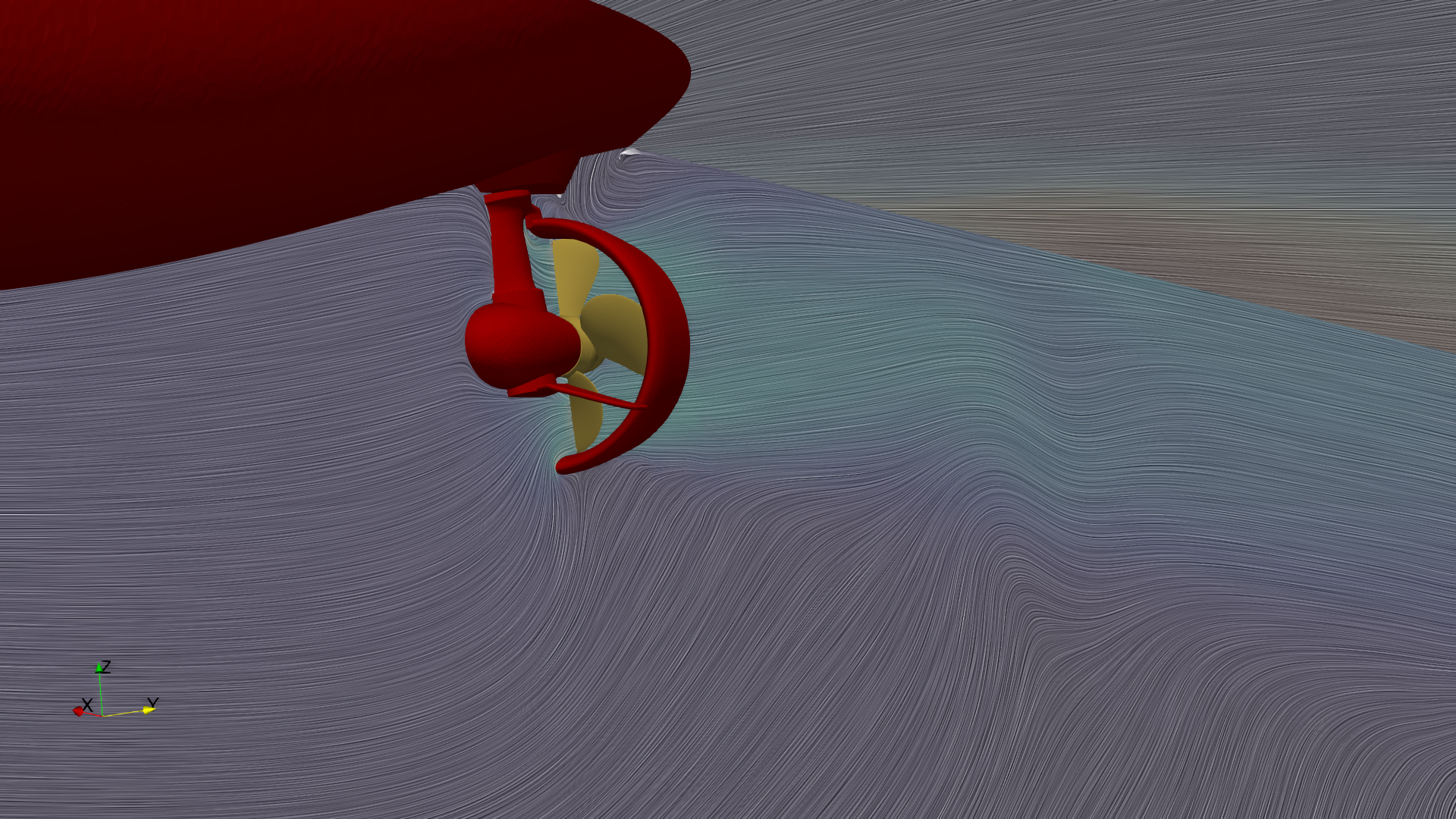
The Dragless Nozzle has been carefully reshaped to maintain favourable water flow around the propeller, not only during low-speed operations but also when a vessel is underway. Where traditional nozzles cause increasing resistance as speed climbs, the Dragless Nozzle enables water to flow more freely, thus helping the vessel move forward with less effort. In practical terms, this design reduces the amount of energy the propeller needs to push the vessel ahead. Offshore vessels typically see 8–10% lower energy use, while fishing vessels experience 8–12% reductions depending on their operating conditions. Over a year, these efficiency improvements translate into 6–7% lower fuel consumption and CO₂ emissions, a meaningful reduction for vessels that operate day and night, year-round.
Beyond energy savings, the Dragless Nozzle also improves how water moves around the propeller. This smoother flow helps prevent cavitation, i.e., tiny bubbles that can collapse with force, damaging equipment, producing noise, and causing vibrations onboard.
By reducing the risk of cavitation, the Dragless Nozzle contributes to:
These features support sustainability not only from an environmental perspective butalso through improved working conditions and reduced material consumption overthe vessel’s lifetime.
The Dragless Nozzle also requires less steel to produce compared to a conventional nozzle. Steel is carbon-intensive to manufacture, so this reduction helps lower the product’s embedded emissions even before it is installed. On some vessel sizes, the redesigned profile can also accommodate a smaller gear housing, reducing material use further. This aligns with an important sustainability principle: cutting emissions not only in operation, but throughout the full lifecycle of a product: from production to installation and long-term use.